Get Free Ebook Preaching: Communicating Faith in an Age of Skepticism, by Timothy Keller
Yet, this publication is actually different. Feeling anxious prevails, but except this publication. Preaching: Communicating Faith In An Age Of Skepticism, By Timothy Keller is precisely composed for all cultures. So, it will certainly be easy and also offered to be recognized by all people. Now, you need only prepare little time to get and also download the soft documents of this publication. Yeah, guide that we offer in this on-line website is all in soft documents layouts. So, you will not feel complicated to bring big book all over.
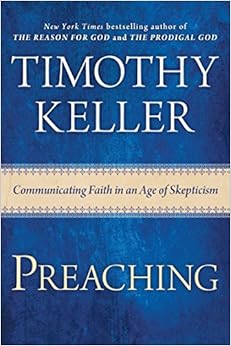
Preaching: Communicating Faith in an Age of Skepticism, by Timothy Keller

Get Free Ebook Preaching: Communicating Faith in an Age of Skepticism, by Timothy Keller
Will reviewing practice influence your life? Lots of say yes. Reviewing is a great practice; you can establish this routine to be such interesting way. Yeah, reading practice will not only make you have any kind of favorite activity. It will be among support of your life. When reading has ended up being a practice, you will certainly deficient as disturbing activities or as boring task. You can gain many advantages and also relevances of reading.
And also below, that book is Preaching: Communicating Faith In An Age Of Skepticism, By Timothy Keller, as you need it satisfying the subject of your obstacles. Life is challenges, jobs, as well as duties are additionally difficulties, and also there are numerous things to be obstacles. When you are definitely overwhelmed, just get this book, as well as select the vital information from guide. The material of this may be made complex as well as there are many motifs, but reviewing based upon the topic or analysis web page by page can assist you to recognize merely that publication.
You could choose to this publication because it is basic points to get over. It means that the words and language to utilize in this Preaching: Communicating Faith In An Age Of Skepticism, By Timothy Keller been available in simplicity. This possible book will certainly help you quickly making better concept of new thought and upgraded info. When you really want to get this publication, juts find it in this website. We will certainly help you to visit the book web link then get it as yours. This doesn't indicate to bewilder you to be in difficult situation.
However, even this book is developed based on the fact, one that is really fascinating is that the writer is very wise to make this publication very easy to review and comprehend. Appreciating the excellent visitors to constantly have reading behavior, every writer offers their finest in offering their thoughts and also jobs. Who you are as well as just what you are doesn't become any large problem to obtain this publication. After visiting this site, you can inspect more about this book then discover it to understand analysis.
Review
Praise for Preaching “Superb . . . we should be grateful to Keller for his wisdom, scholarship, and humility.” -The Gospel Coalition “If you want to see ‘between the lines’ and just ‘below the surface’ of our cultural moment and societal ethos . . . Which is to say, if you are any kind of Christian leader, teacher, writer, blogger, public thinker, politician, artist, media person, campus minister, youth leader, parent, Christian educator, spiritual director, or anyone with influence . . . then this is going to be exceptionally helpful for you.”-Byron BorgerPraise for Prayer"...Keller provides a contextually rich guide and companion to prayer."-Kirkus"...if you follow Keller into the arsenal, you will be powerfully equipped to overcome the world/flesh/Devil and see your prayers for kingdom advance answered by almighty God. And if you follow Keller to the banqueting table, you will increasingly feast on new and old treasures of awe and intimacy with your heavenly Father."-The Gospel CoalitionPraise for Encounters with Jesus"Keller’s work belongs on the bookshelf of every serious Bible student. It is not a quick read, but, instead should be savored like fine wine, one sip at a time to glean the full impact of his life-changing message."-Examiner.comPraise for Timothy Keller and his books: "Tim Keller's ministry in New York City is leading a generation of seekers and skeptics toward belief in God. I thank God for him." -Billy Graham “Unlike most suburban megachurches, much of Redeemer is remarkably traditional. What is not traditional is Dr. Keller’s skill in speaking the language of his urbane audience…Observing Dr. Keller’s professorial pose on stage, it is easy to understand his appeal.” -The New York Times “Fifty years from now, if evangelical Christians are widely known for their love of cities, their commitment to mercy and justice, and their love of their neighbors, Tim Keller will be remembered as a pioneer of the new urban Christians.”-Christianity Today Magazine “With intellectual, brimstone-free sermons that manage to cite Woody Allen alongside Matthew, Mark, Luke, and John, Keller draws some 5,000 young followers every Sunday. Church leaders see him as a model of how to evangelize urban centers across the country, and Keller has helped ‘plant’ 50 gospel-based Christian churches around New York plus another 50 from San Francisco to London.” -New York Magazine "Keller’s work belongs on the bookshelf of every serious Bible student. It is not a quick read, but, instead should be savored like fine wine, one sip at a time to glean the full impact of his life-changing message." -Examiner.com on Encounters with Jesus “It has something for everyone—something for the agnostic (Keller makes a strong argument that there are no true atheists); something for the philosopher (although he invites the wounded reader to skip that section); and something for the believer being beckoned into the inner sanctum of sharing in the fellowship of Christ’s sufferings (a place no one naturally wants to go).” -The Gospel Coalition on Walking with God through Pain and Suffering "It is a resource that takes a multidimensional approach to suffering - tackling the internal and external realities - and takes us deep theologically and practically." -Vertical Living Ministries on Walking with God through Pain and Suffering "A luminous and ultimately hopeful examination of the many aspects of suffering." -Booklist on Walking with God through Pain and Suffering “Theologically rich and philosophically informed, yet accessible and filled with practical wisdom.”-Cardus on Every Good Endeavor “This book is for us all and through its reading it can change and reshape your entire outlook on your life.”-SarahMac on Every Good Endeavor “It’s a great resource to equip you to speak with your secular friends; to show them why the Christian understanding of marriage is not only a tremendous blessing, it’s the only one that works.”-ChristianPost.com on The Meaning of Marriage “The Meaning of Marriage is incredibly rich with wisdom and insight that will leave the reader, whether single or married, feeling uplifted. While the book is filled with expertly selected biblical verses, nonreligious readers willing to ‘try on’ these observations may find answers not only to the meaning of marriage but to that even bigger question—the meaning of life itself.”-The Washington Times on The Meaning of Marriage “This is the book I give to all my friends who are serious spiritual seekers or skeptics.”-Rick Warren, author of The Purpose Driven Life, on The Reason for God “Keller mines material from literary classics, philosophy, anthropology and a multitude of other disciplines to make an intellectually compelling case for God. Written for skeptics and the believers who love them, the book draws on the author's encounters as founding pastor of New York's booming Redeemer Presbyterian Church…[The Reason for God] should serve both as testimony to the author's encyclopedic learning and as a compelling overview of the current debate on faith for those who doubt and for those who want to reevaluate what they believe, and why.” -Publishers Weekly on The Reason for God “World has briefly reviewed about 200 books over the past year. Many stand out, but one in particular is likely to change many lives and ways of thinking. World’s Book of the Year is Tim Keller’s The Reason for God. ”-Marvin Olasky on The Reason for God
Read more
About the Author
TIMOTHY KELLER was born and raised in Pennsylvania and educated at Bucknell University, Gordon-Conwell Theological Seminary, and Westminster Theological Seminary. He was first a pastor in Hopewell, Virginia. In 1989 he started Redeemer Presbyterian Church in New York City with his wife, Kathy, and their three sons. Today, Redeemer has more than six thousand regular Sunday attendees and has helped to start more than two hundred and fifty new churches around the world. Also the author of Prayer, Encounters with Jesus, Walking with God through Pain and Suffering, Every Good Endeavor, The Meaning of Marriage, Generous Justice, Counterfeit Gods, The Prodigal God, Jesus the King, and The Reason for God, Timothy Keller lives in New York City with his family.
Read more
See all Editorial Reviews
Product details
Hardcover: 320 pages
Publisher: Viking; Complete Numbers Starting with 1, 1st Ed edition (June 9, 2015)
Language: English
ISBN-10: 0525953035
ISBN-13: 978-0525953036
Product Dimensions:
5.2 x 1.1 x 7.5 inches
Shipping Weight: 8.8 ounces (View shipping rates and policies)
Average Customer Review:
4.8 out of 5 stars
199 customer reviews
Amazon Best Sellers Rank:
#139,586 in Books (See Top 100 in Books)
All Christians have a spiritual responsibility to “teach and admonish one another with all wisdom†(Col. 3:16). Some Christians have a further responsibility to teach the word of God more formally, whether in a Sunday School class or from the pulpit. While all Christians can read Tim Keller’s Preaching profitably, it is intended specifically for those with more formal responsibilities to communicate the faith. (Because most readers of this book will be pastors looking for sermon help, however, I’m going to refer throughout this review to preachers and preaching, instead of using broader terms like teaching or communication.)Keller divides his material into three parts.Part One, “Serving the Word,†argues that preachers should preach the Bible (Chapter 1), which means preaching the gospel (Chapter 2), which means preaching Jesus Christ (Chapter 3), about whom all Scripture is written (Luke 24:27). Keller recognizes that there are times when preachers should deliver topical sermons, but their bread-and-butter sermons should be expositional. Because Scripture tells the unified story of what God has done in Christ through the Spirit to accomplish our salvation, sermons should be gospel-centered. Two dangers need to be avoided: (1) “preaching a text, even about Jesus, without really preaching the gospel,†which is typical of moralistic preaching; and (2) “preaching ‘Christ’ without really preaching the text,†which is typical of proof-texting. To help avoid these dangers, Keller outlines six ways to preach Jesus from all of Scripture that are adequate to both the gospel and the context of a particular passage.Part Two, “Reaching the People,†opens with the recognition that preachers must contextualize their messages to their audiences (Chapter 4). Such contextualization has biblical precedent. For example, compare and contrast how Paul preached to Jews meeting in a synagogue (Acts 13:14–47) with how he preached to Gentiles meeting on Mars Hill (17:22–31). Contextualized preaching consists of a two-fold movement whereby sermons “adapt to the culture†as well as “confront the culture.†Because God created the world and humanity in his image, he has left traces of himself in all cultures. This makes adaptation possible. But humanity has sinned against God and distorted the goodness of his creation at all levels—individual and social, intellectual and emotional, spiritual and material. This makes confrontation necessary.Chapter 5, “Preaching and the (Late) Modern Mind,†is the best chapter in the book, in my opinion. It exposes the “baseline cultural narratives†that characterize the late-modern mind. (Keller prefers the term late-modern to postmodern because he thinks contemporary culture is “less a reversal of modernity than an intensification of its deepest patterns.â€) These narratives include “the sovereign self,†“absolutely negative freedom,†“self-authorizing morality,†and “science as the secular hope.â€Chapter 6, “Preaching Christ to the Heart,†is the second best chapter, in my opinion. It recognizes that people are affective beings, not merely intellectual ones. “Preaching cannot simply be accurate and sound,†Keller argues. “It must capture the listeners’ interest and imaginations; it must be compelling and penetrate to their hearts.â€Part Three, “In Demonstration of the Spirit and of Power†consists of a single chapter about the character of preachers themselves. Keller writes, “your listeners will be convinced by your message only if they are convinced by you as a person.†Preaching, he goes on to say, thus deals with “text†(Bible-gospel-Christ), “context†(culture-heart), and “subtext†(what really motivates the preacher). Though Keller does not point this out himself, these three terms more or less correspond to the threefold division of classical rhetoric: logos (text), pathos (context), and ethos (subtext).Keller concludes the book with a helpful appendix about “Writing an Expository Message†that focuses on the goal of the biblical text, the theme of the sermon, an outline that develops this theme, and arguments, illustrations, and applications that flesh out this theme. The book concludes with 60+ pages of notes, roughly 20 percent of the entire book. These notes not only identify the source of quotations and books for further reading, they also extend Keller’s analysis. Because they are placed at the end of the book, however, they don’t distract from the development of his main themes. (If you are a fan of Jonathan Edwards, I encourage you to read note 28 on pages 271–275; it shows how Edwards contextualized his preaching to Indians at the Stockbridge Mission.)Though I found Preaching to be a helpful work, which was especially insightful on late modernity’s “baseline cultural narratives,†I nonetheless found myself asking a few questions.First, and this is impressionistic, I felt that some of Keller’s examples of how to preach Christ from all of Scripture were not adequate to the text’s context. For example, discussing the horrifying story of the Levite and his concubine (Lev. 19), Keller suggests the following as one of many possible ways to preach Christ from the passage: “When we see a man who sacrifices his wife to save his own skin—a bad husband—how can we not think of a man who sacrificed himself to save his spouse—the true husband?†I see Keller’s point, but is that really a way to find Christ in the text?Second, Keller defines the gospel in almost exclusively Pauline and Protestant Reformation terms: “we are saved through Christ alone, by faith alone, but not by a faith which remains alone. True salvation always results in good works and a changed life.†This is good and true, of course—see Ephesians 2:8–10, for example—but it fails to take into account other ways of summarizing the gospel, such as that of Jesus himself in Mark 1:15: “The time is fulfilled and the kingdom of God is at hand; repent and believe the gospel.†I can’t help but wonder whether the outline of a kingdom-gospel message fits neatly within Keller’s “metaoutline†for preaching:• Here’s what we face.• Here’s what we must do.• Why we can’t do it.• How Jesus did it.• How through faith in Jesus you should live now.Third, Keller’s conversation partners throughout the book are almost exclusively Calvinist. He does mention Protestant mainline preachers, but not evangelical Arminians, Methodists, or Wesleyan-Holiness preachers. (I’m an Arminian Pentecostal.) Given that these non-Calvinist evangelicals have produced quite a few well-known preachers, I can’t help but wonder whether they might have insights to share as well.In spite of these questions, Preaching is a valuable work by a respected pastor whose judgment on such matters is always worth listening to. I get the feeling I’ll be returning to this book again (and again).
The two words that immediately come to mind when consideringTimothy Keller’s new book is: rocket fuel. Keller’s book is a supercharged approach to expository preaching.Preaching: Communicating Faith in an Age of Skepticism stands alone in book market that includes several approaches to preaching. Some books provide preachers with the nuts and bolts or the mechanics of preaching. Others focus on the rationale for expository preaching. Keller’s work includes both and so much more.Readers will be drawn to a few important items that stand out in this work:The Centrality of the GospelFirst, Keller is relentless about the necessity of gospel preaching. He stands with C.H. Spurgeon who famously admonished preachers to “preach a text and make a beeline to the cross of Christ.†Keller repeatedly challenges preachers to preach “Christ crucified,†to “preach Christ through every theme of the Bible.†Wherever the preacher finds himself in the biblical text, he must alert the listener to the person of Christ and the completed work of Christ. It is this feature that makes Keller’s work unique and should propel is work to the required reading list of every Bible College and Seminary course that pertains to preaching.The Importance of the HeartSecond, Keller focuses on the heart in biblical preaching:Preaching cannot simply be accurate and sound. It must capture the listeners’ interest and imagination; it must be compelling and penetrate to their hearts. It is possible to merely assert and confront and feel we have been very ‘valiant for truth,’ but if you are dry or tedious, people will not repent and believe the right doctrine you present. We must preach so that, as in the first sermon on Pentecost, hearers are ‘cut to the heart.’Dr. Keller walks readers through a critical discussion of the heart which is “the seat of the mind, will, and emotions, all together.†Critical to this discussion is the idea that expository preaching must move the heart to action. Keller notes, “It is all-important, then, that preaching move the heart to stop trusting and loving other things more than God … So the goal of the sermon cannot be merely to make the truth clear and understandable to the mind, but must also be to make it gripping and real to the heart.†Thus, Keller highlights the primacy of both the heart and the mind. To exclude the mind in the preaching endeavor will lead to contentless preaching. But to exclude the heart will necessarily lead to preaching which is void of application.The standout feature of this section is Keller’s treatment of Jonathan Edwards and his approach to the heart in preaching. Edwards refuses to pit the heart against the mind and argues for a view of preaching that integrates both. Keller does a terrific job of expounding Edwards’s work, Religious Affections and the impact such of view has on preaching.There is much to commend in Keller’s work on preaching. Readers are encouraged to dive in and benefit from this godly man who has mastered the preaching task. May the rocket fuel in Keller’s work launch many sermons into the stratosphere for the glory of God!Other titles that will serve preachers well include The Supremacy of God in Preaching by John Piper, He is Not Silent: Preaching in a Postmodern World by Al Mohler, The Kind of Preaching God Blesses by Steven Lawson, and Preaching and Preachers by Martyn Lloyd-Jones.I received this book free from the publisher. I was not required to write a positive review.4.5 stars
Preaching: Communicating Faith in an Age of Skepticism, by Timothy Keller PDF
Preaching: Communicating Faith in an Age of Skepticism, by Timothy Keller EPub
Preaching: Communicating Faith in an Age of Skepticism, by Timothy Keller Doc
Preaching: Communicating Faith in an Age of Skepticism, by Timothy Keller iBooks
Preaching: Communicating Faith in an Age of Skepticism, by Timothy Keller rtf
Preaching: Communicating Faith in an Age of Skepticism, by Timothy Keller Mobipocket
Preaching: Communicating Faith in an Age of Skepticism, by Timothy Keller Kindle


Tidak ada komentar:
Posting Komentar